Three Estate Planning Mistakes Farmers and Ranchers Make and How to Avoid Them
Quick Answer
Farmers and ranchers often fail to create an estate plan, rely on joint ownership, and overlook liquidity needs. To avoid these, work with experts to create a comprehensive plan, use business entities or trusts for property, and address potential incapacity and death costs. This protects your legacy and ensures your farm or ranch continues for future generations.
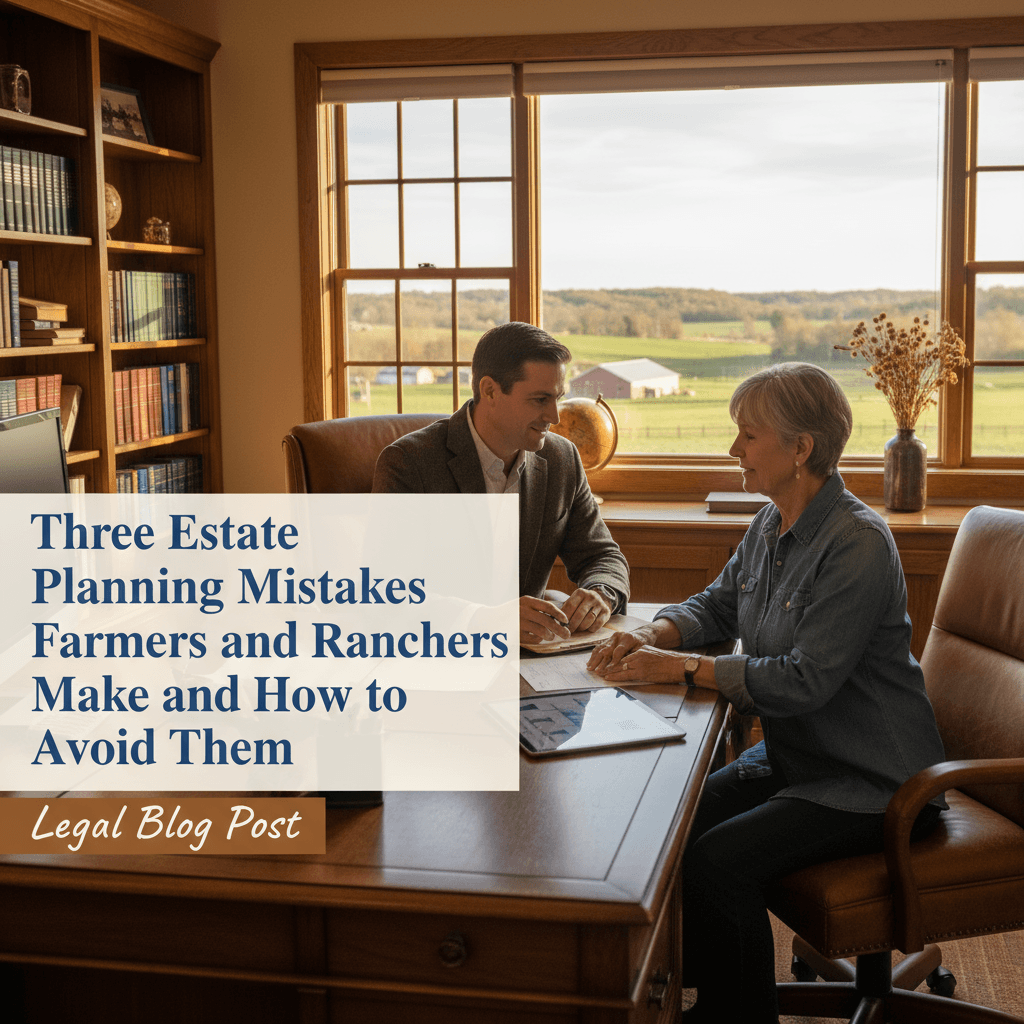
Farming or ranching is more than a means of livelihood – it is about preserving a legacy and unique way of life. Unfortunately, many farmers and ranchers fail to make an estate plan. The farm or ranch that has been passed down for generations then ends up being sold and converted into non-agricultural use, cutting the legacy short and ending the family’s unique lifestyle choice.
Sadly, farmers and ranchers are not the only ones who avoid making or updating an estate plan – many others, including business owners and parents, also avoid planning, which can cut their legacy short. Below are three common estate planning mistakes farmers and ranchers make and how to avoid them.
Mistake #1 – Failing to Plan
Farmers and ranchers have complex estate planning needs. They may have children who want to continue the farming or ranching business and children who do not. They will be forced to decide who inherits the land, the equipment, the livestock, and other assets, all the while trying to keep things fair and equal. As a result, many farmers and ranchers cannot decide what to do and end up without any estate plan at all. For others, this same circumstance can occur with the family home, rental properties, or the family business. One of the big risks is that if no plan is put in place, property will be split among children as tenants in common with the ability of each to force a sale to satisfy his or her share. Over time, this can mean a loss of family acreage and the loss of the farming operation altogether.
Fortunately there are many estate planning options available to farmers, ranchers, and others that will allow you to fulfill your ultimate goals. No matter your occupation or asset mix, you need to work with a team of experts (including attorneys, accountants, bankers, insurance specialists, and financial advisors) who are familiar with the nuances of estate planning to insure that the plan will work as anticipated when it is needed.
Mistake #2 – Relying on Joint Ownership
Many people, including farmers, ranchers, and others, believe that the easiest way to plan their estates and avoid probate is to own property in joint names with family members. However, farmland or ranch property that is jointly owned and enrolled in programs administered by the U.S. Department of Agriculture may result in subsidies being left on the table. Aside from this, joint ownership causes you to give up control of your real estate. Unlike other planning options, joint ownership may not be easy to change, since “undoing” joint ownership can have significant costs and tax implications.
Holding real estate in the name of a business entity (corporation, partnership, or limited liability company) or a trust is a better option and will allow you, whether you’re a farmer or rancher, to maximize subsidies, minimize liability, and retain control.
Mistake #3 – Overlooking Liquidity Needs
Incapacity and death are expensive and often require cash to pay expenses. But, farmland, farming equipment, personal residences, automobiles, and other personal effects are illiquid. Without properly planning for immediate and long-term cash needs, families will be forced to quickly sell land and equipment for pennies on the dollar.
Farmers, ranchers, and others have several options to choose from when creating a plan to manage debt and expenses after incapacity or death. Financial advisors, bankers, and insurance professionals can assist with securing lines of credit and the proper amount of disability insurance, long term care insurance, and life insurance. Attorneys can assist by creating life insurance trusts, business entities, and other more complex strategies like part gift/part sale arrangements in exchange for a note or private annuity.
Final Thoughts on Estate Planning for Farmers and Ranchers
Farmers and ranchers live a different lifestyle and require specialized estate planning solutions. But they’re not alone – everyone from business owners to parents has unique planning needs. A team of advisors, including attorneys, accountants, bankers, insurance professionals, and financial advisors, can assist you in creating and maintaining a plan that will preserve your legacy and unique way of life.