Can an Out-of-State Executor Serve in Missouri Probate?
Quick Answer
Yes. An out-of-state executor can usually serve as personal representative in a Missouri probate estate. Missouri law does not require the executor to live in Missouri, but a nonresident personal representative must file a designation of resident agent under RSMo 473.117 so a Missouri resident or Missouri trust company can receive service of process and notices.

Yes. If you were named executor in a will and you live outside Missouri, that usually does not prevent you from serving.
Missouri probate law uses the term "personal representative" for the person appointed to handle an estate. People still say "executor" when there is a will and "administrator" when there is no will, but the court appointment is for a personal representative. Missouri does not treat living in another state as an automatic disqualification.
The extra step is practical: before a nonresident personal representative receives letters testamentary or letters of administration, Missouri law requires a resident agent designation. That gives the court and interested parties a Missouri contact for service of process and probate notices. See RSMo 473.117.
For the bigger picture on the role itself, start with our guide to Missouri personal representatives. If you are just trying to figure out whether probate is needed at all, use our Missouri probate decision tool.
What Missouri requires from a nonresident executor
A nonresident executor generally needs to do the same things a Missouri executor does: file the probate petition, obtain court authority, inventory estate assets, deal with creditors, protect property, handle taxes, and distribute the estate correctly.
The nonresident-specific requirement is the Designation of Resident Agent.
Under RSMo 473.117, before a nonresident personal representative can be issued letters, he or she must file a designation, including the signature and address, of a Missouri resident or authorized Missouri trust corporation to act as agent for service of process and receipt of notice.
In plain English: the executor can live in Illinois, Florida, Texas, California, or anywhere else. Missouri still wants someone local who can receive formal legal papers for the estate.
For many out-of-state clients, our firm serves as the resident agent when we represent the estate. That keeps notices and court communication from bouncing between states and gives the probate court a Missouri address for the case.
Do you have to travel to Missouri for probate court?
Usually, no.
Most Missouri probate work is handled through filings, attorney communication, signatures, and court orders. If the estate is being administered independently, the personal representative normally does not need to appear in person for routine probate steps.
Independent administration matters because Missouri law allows many estates to proceed without constant court involvement when the will authorizes it or all required interested parties consent. See RSMo 473.780. An independent personal representative still has duties, but under RSMo 473.787, the administration generally proceeds without adjudication, order, or direction of the court except where the probate code requires it.
That does not mean the court disappears. It means the day-to-day administration is less hearing-heavy.
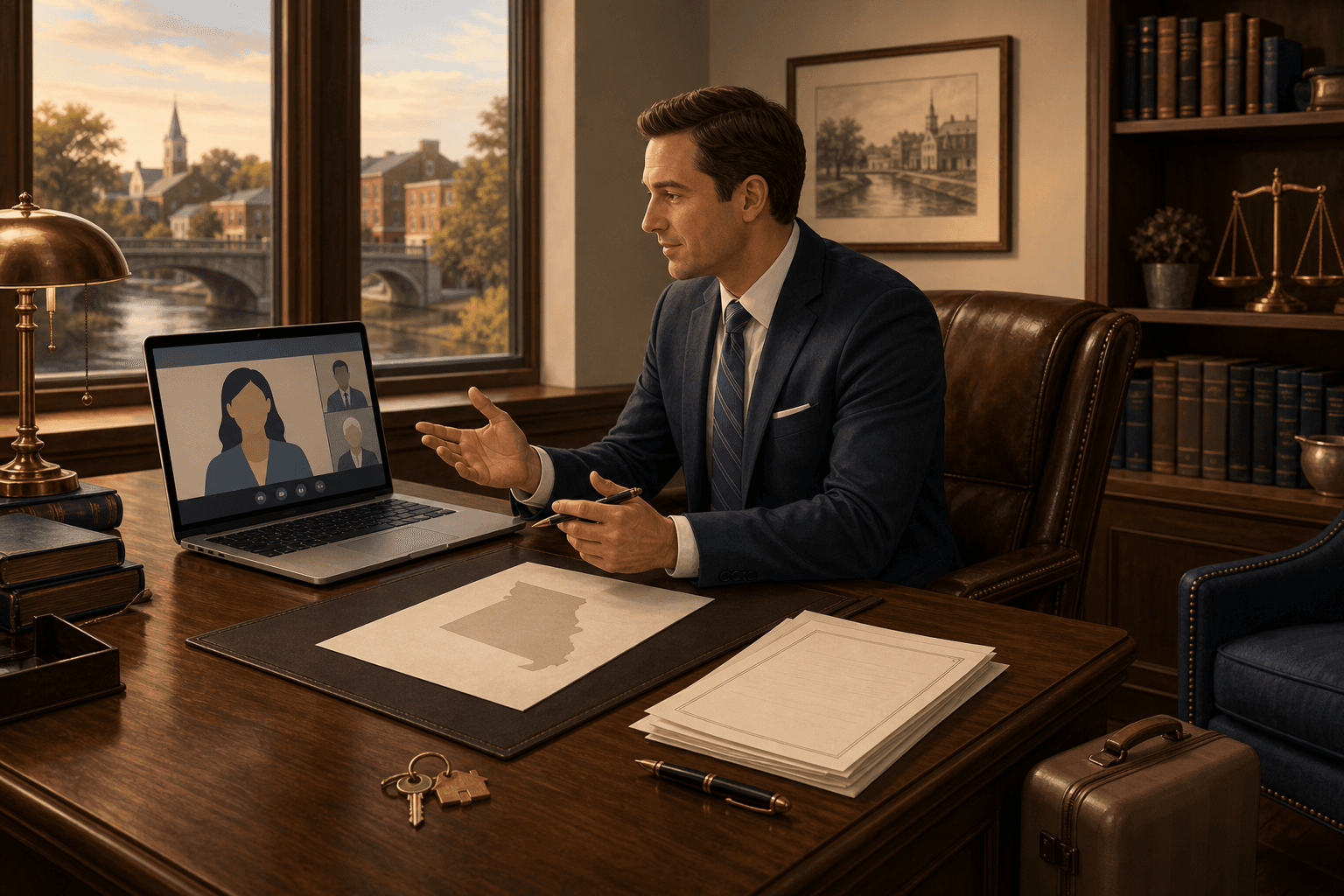
If a hearing is needed, many Missouri courts will consider or authorize remote appearances by Webex, especially for routine probate matters. Whether that is allowed depends on the county, the judge, the type of hearing, and whether anyone objects. It is not something to assume without checking the local court practice, but it is common enough that out-of-state executors should ask about it before booking a flight.
You can find Missouri probate court information by county on our county resources page. We have specific guides for St. Charles County probate, St. Louis County probate, and City of St. Louis probate.
The bigger problem is not court. It is local logistics.
Out-of-state executors usually worry about the judge. In our experience, the harder part is the stuff outside the courtroom.
Someone may need to secure the house. Change locks. Stop mail from piling up. Find insurance information. Check whether utilities are on. Photograph personal property. Arrange a cleanout. Get vehicles titled. Deal with a vacant house during winter. Meet a realtor. Sign closing documents. Retrieve financial records from a desk drawer that nobody has opened in years.
None of that is glamorous probate work, but it is where out-of-state administration gets frustrating fast.
This is also where having a Missouri team matters. A local probate attorney can handle the court process, coordinate filings, receive notices, and help connect you with people who can deal with house cleanouts, personal property, real estate sales, and practical estate tasks. You still make the decisions as personal representative. You just do not have to personally drive across Missouri every time something needs attention.
If the estate includes real estate, read our guide on transferring a house after death in Missouri. If you expect a sale, the probate process needs to be coordinated with the title company, realtor, and court authority.
What can be handled remotely?
A lot of the process can be handled without the executor being physically present in Missouri.
Typical remote tasks include:
- Initial probate consultation and case planning
- Signing probate pleadings and resident agent forms
- Filing the application or petition to open the estate
- Communicating with the court through counsel
- Publishing and tracking creditor notices
- Preparing the inventory
- Reviewing claims
- Coordinating title transfers and real estate issues
- Preparing settlement documents and closing filings
Some tasks may still require original documents, notarized signatures, or coordination with local people. The original will, if there is one, often needs to be filed with the Missouri probate court. Certain financial institutions may have their own signature or medallion requirements. Real estate closings can usually be handled remotely, but title companies may require specific documents.
The point is not that everything is effortless. The point is that living outside Missouri is manageable if the case is organized from the beginning.
Common pain points for out-of-state executors
The first pain point is delay. Every missed signature, missing death certificate, wrong address, or unanswered creditor issue takes longer when the executor is in another state. A Missouri attorney can usually keep the file moving, but the personal representative still needs to respond quickly.
The second is family pressure. Heirs may be local while the executor is not. That can create a strange dynamic: the local relatives see the house, the furniture, the mail, and the problems every day, while the executor is trying to manage the estate from a phone. Clear communication helps. So does having a neutral lawyer explain what Missouri probate does and does not allow.
The third is property. Vacant houses are work. Insurance can be tricky. Personal property disappears if nobody secures it. Cleanouts can become emotional, especially when family members disagree over sentimental items.
The fourth is money. Executors sometimes pay bills too early, distribute money too soon, or reimburse themselves without the right paper trail. Missouri creditor rules and court requirements matter. Before paying a deceased person's bills, read Should I Pay My Deceased Loved One's Bills in Missouri?.
The fifth is paperwork. Probate has deadlines. Missouri requires inventories, notices, and closing documents. If you are serving as executor, our Missouri executor checklist is a good starting point.
When an out-of-state executor may not be the best choice
Being allowed to serve does not always mean you should serve.
If there is active family conflict, a complicated business, messy real estate, missing records, or a high risk that someone will challenge the will, the distance can become a real burden. Sometimes the better choice is to nominate a Missouri resident, a trusted family member, or another qualified person to serve instead. Missouri law allows certain people with priority to nominate another qualified person in some situations. See RSMo 473.110.
But do not decline just because you live outside Missouri. Distance is a problem to plan around, not a legal wall.
How Schnurbusch Law helps out-of-state executors
We represent personal representatives in Missouri probate estates, including executors who live outside Missouri. For the right case, we can serve as the Missouri resident agent, handle probate filings, communicate with the court, and help coordinate local issues that make out-of-state administration difficult.
If you are named executor for a Missouri estate and you live somewhere else, start by figuring out three things: where the decedent lived, what assets are in Missouri, and whether there is an original will. Then schedule a probate consultation so we can map the next step before deadlines and local logistics start stacking up.
You can schedule a Missouri probate consultation or start with the Missouri executor checklist if you are still gathering information.
Serving as executor or administrator?
Missouri probate has deadlines, notices, inventory work, creditor issues, and court filings. If you are the person responsible for the estate, the checklist is a good place to start.
Talk to a Missouri Probate Attorney